Many property owners are surprised to learn that homeowners insurance and landlord insurance are not the same thing. If you rent out your home or own an investment property, relying on a standard homeowners policy could leave you with major coverage gaps.
Understanding the difference between these two policies is essential to protecting your property and avoiding costly insurance mistakes.
What Is Homeowners Insurance?
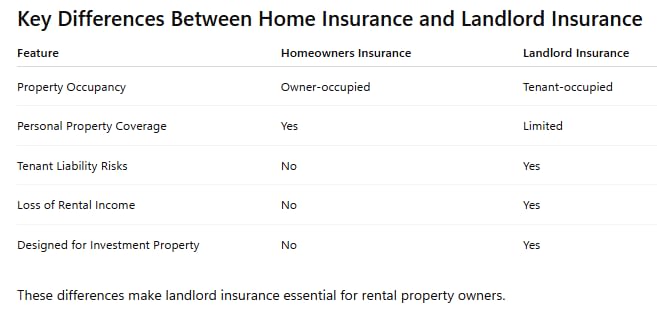
Homeowners insurance is designed for owner-occupied homes. In other words, it protects a house where the owner lives as their primary residence.
A typical homeowners insurance policy provides coverage for:
Property Protection
Coverage for damage to the home caused by events such as:
- Fire
- Lightning
- Windstorms
- Hail
- Certain types of water damage
Personal Property Coverage
Protection for the homeowner’s belongings, including furniture, clothing, and electronics.
Liability Protection
Coverage if someone is injured on your property and you are found legally responsible.
Additional Living Expenses
If a covered loss makes the home uninhabitable, the policy may cover temporary housing costs.
Homeowners insurance works well when the property is occupied by the owner.
What Is Landlord Insurance?
Landlord insurance (also called rental property insurance) is designed specifically for properties that are rented to tenants.
Because rental properties involve different risks, landlords need a policy tailored for income-producing properties.
A landlord insurance policy usually includes:
Property Coverage
Protection for the structure of the rental property against fire, storms, vandalism, and other covered events.
Liability Protection
Coverage if a tenant or visitor is injured on the property and the landlord is found responsible.
Loss of Rental Income
If a covered loss forces tenants to move out temporarily, the policy may reimburse the landlord for lost rental income while repairs are made.
Optional Coverage for Landlord Property
Coverage for appliances, maintenance equipment, or furnishings that belong to the landlord.
What Happens If You Rent Your Home Without Landlord Insurance?
Some homeowners assume they can simply keep their homeowners insurance policy when renting out their property.
However, this can be risky.
Many homeowners insurance policies exclude coverage once the home becomes a rental property.
This means that if a claim occurs, the insurance company could deny the claim because the home is no longer owner-occupied.
Examples of potential issues include:
- Tenant injuries
- Property damage caused by tenants
- Loss of rental income after a claim
Landlord insurance helps protect property owners from these risks.
When Should You Switch to Landlord Insurance?
You should consider landlord insurance if:
- You rent out your home full-time
- You own a rental property or investment property
- You move out and rent your former residence
- You own a duplex or multi-family property with tenants
- You rent your home for extended periods
Even if you only have one rental property, landlord insurance can help protect your investment.
How Much Does Landlord Insurance Cost?
Landlord insurance usually costs slightly more than homeowners insurance because rental properties carry additional risks.
However, the cost is often very reasonable compared to the protection it provides.
Insurance premiums depend on factors such as:
- Property value
- Location
- Age of the home
- Safety features
- Coverage limits
For most landlords, the cost of insurance is small compared to the rental income the property generates.
Protect Your Rental Property the Right Way
If you own a rental property or plan to rent out your home, the right insurance coverage can help protect your property and income.
At Starwest Insurance, we help homeowners and real estate investors find the right insurance solutions for their properties.
We can help you insure:
- Rental properties
- Investment homes
- Short-term rentals
- Vacant properties
- Fix and flip projects
📍 Starwest Insurance Services
Westminster & Irvine, California
Contact us today for a free quote on landlord insurance or homeowners insurance.